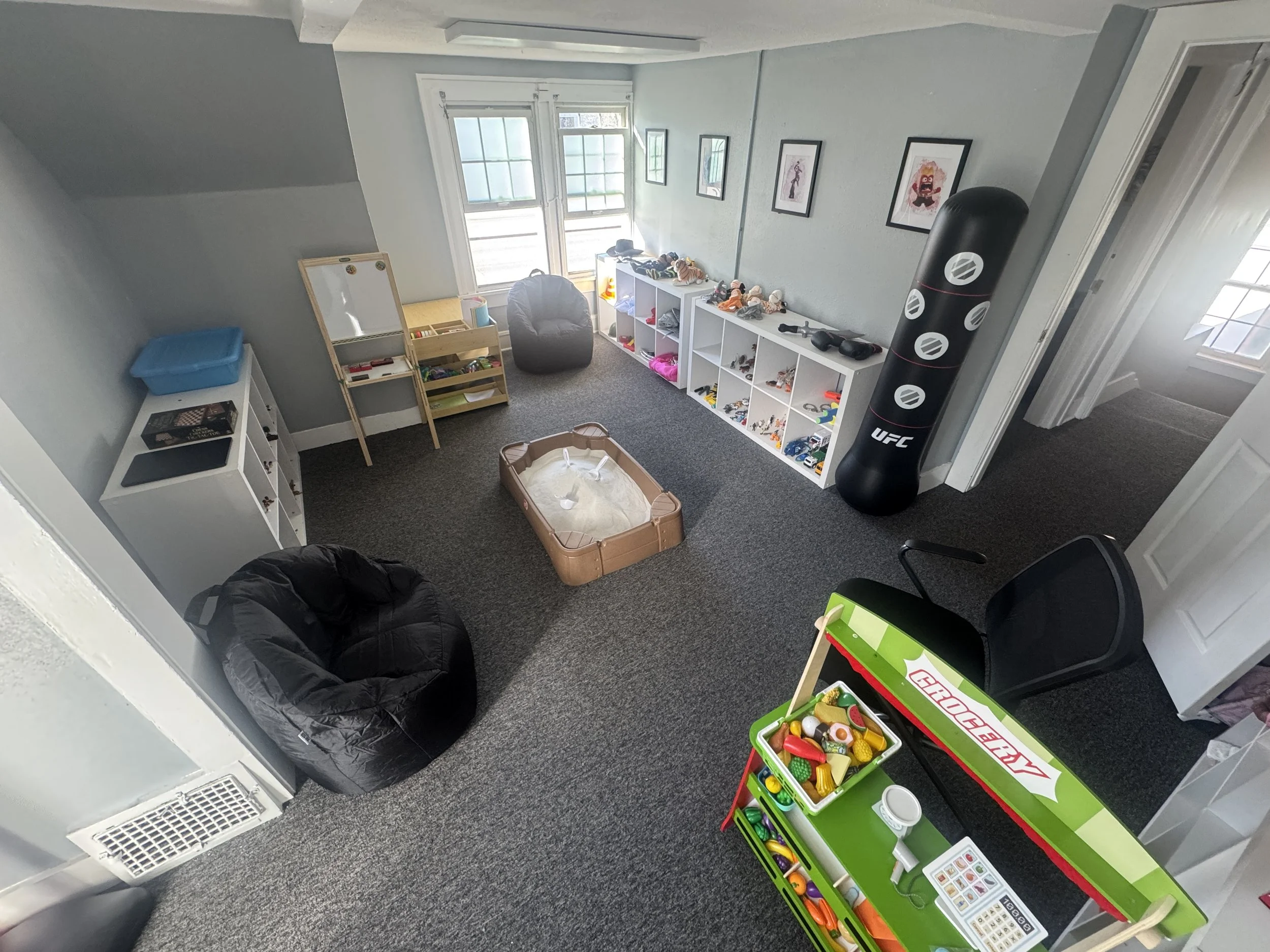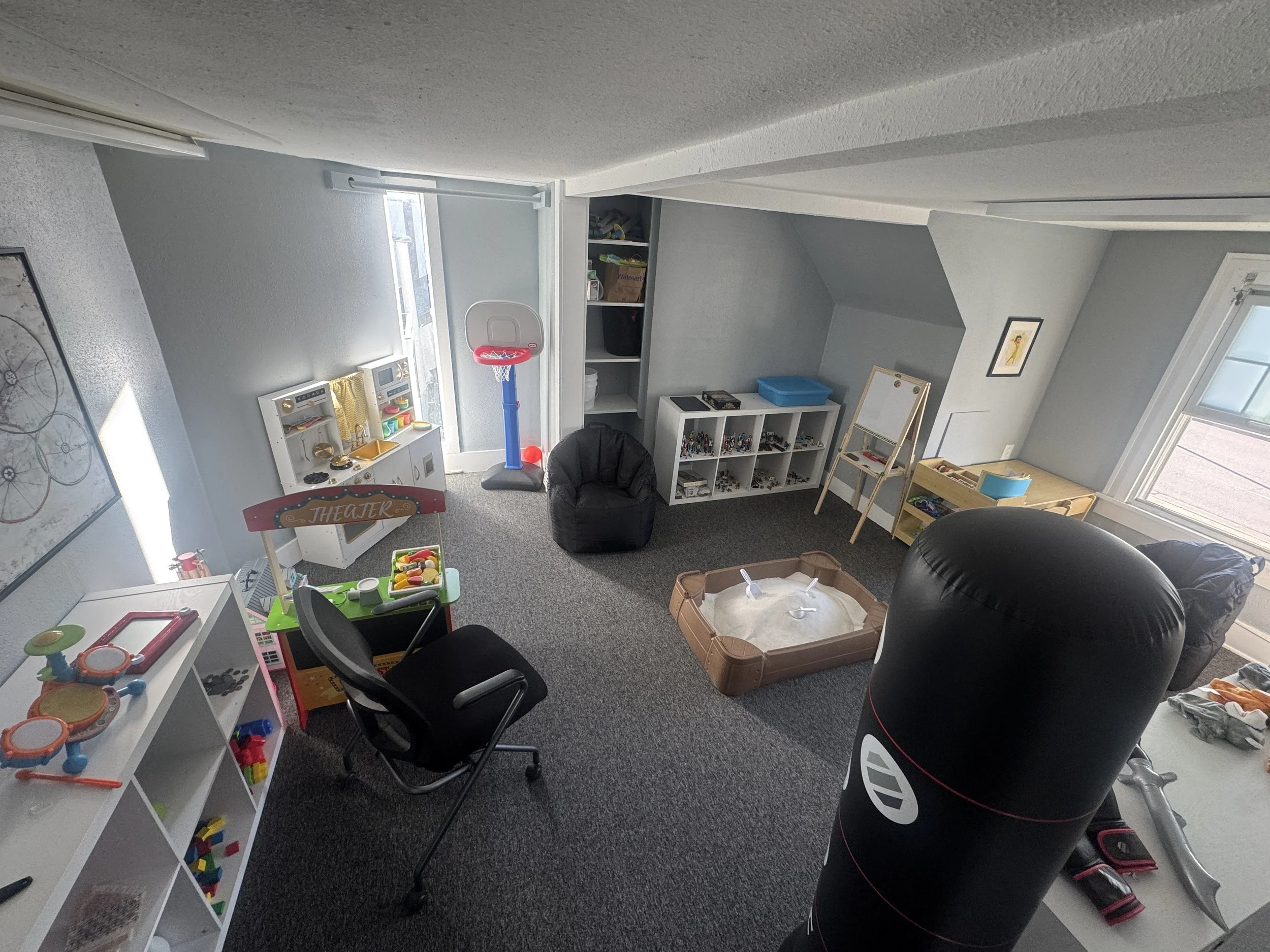

Turning Point Center recently added Play Therapy to its continuum of care, expanding service offerings for younger children and addressing a community service gap.
Why play therapy?
Children developmentally lack the verbal capacity to express complex emotions and process difficult experiences. Play therapy offers a therapeutic medium through which children can communicate, process experiences, and heal using toys and play as their language. Play therapy can both be a verbal and non-verbal dependent therapy, which is developmentally considerate. Research supports its effectiveness in treating trauma, anxiety, behavioral disorders, mutism and attachment issues.
Key needs addressed by play therapy:
Rising rates of childhood anxiety, trauma, and behavioral challenges.
Limited access to developmentally considerate child mental health services in NOCO
Demand for early intervention to prevent long-term psychological issues.
Adding therapy to service offerings was a two-part process.
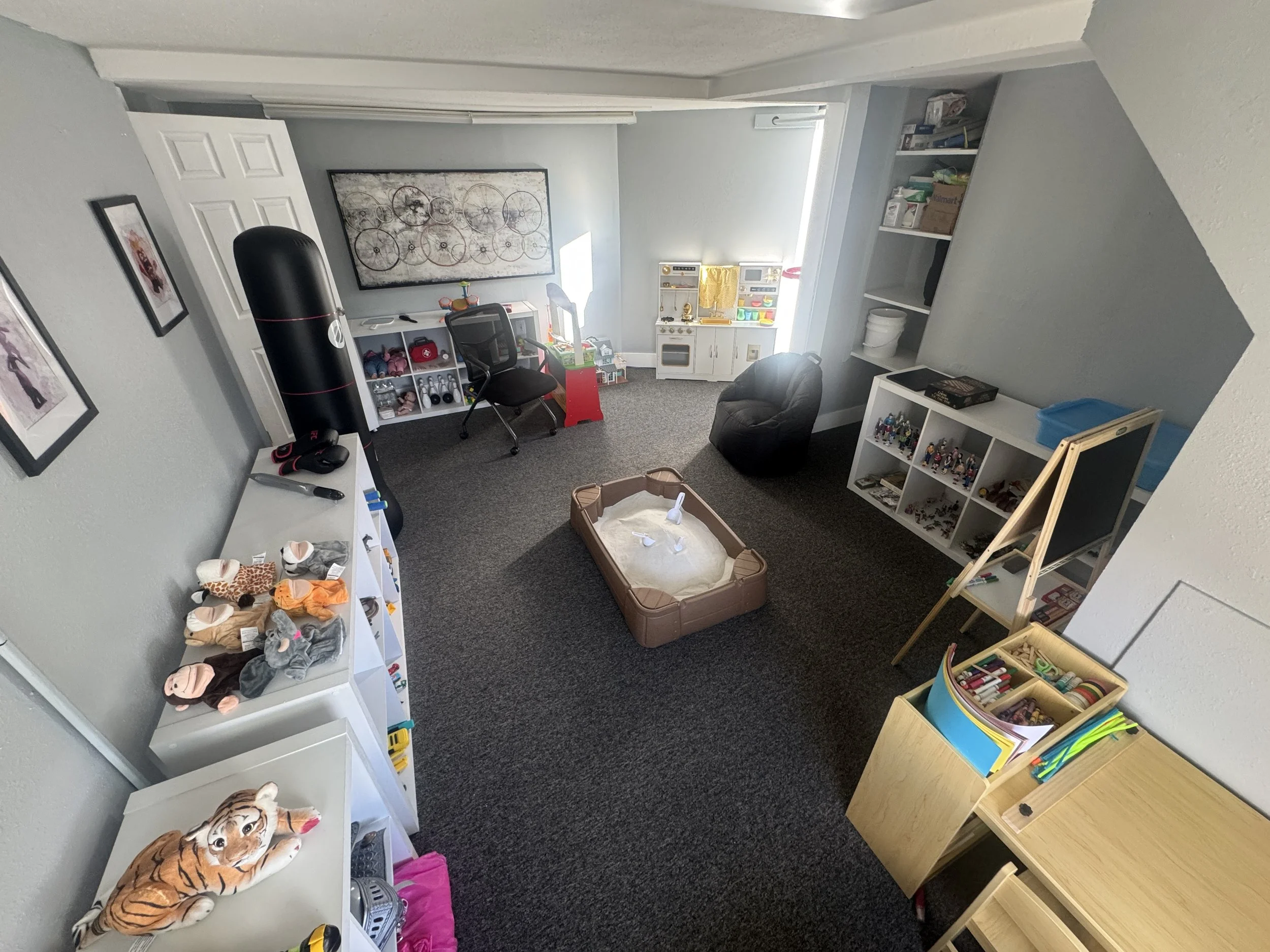
First, we had to convert a regular therapy room to a play therapy room. Play Therapy rooms are filled with specific therapeutic toys and materials, child-sized and safe furniture for little ones, room design features such as lighting, rugs/mats, and sensory tools, and organizational tools for keeping the toys and materials organized between uses. For this need, Turning Point applied for funding through Johnstown Scheels’s fall competitive annual giving event and was one of 20 recipients of $ 5,000. We are grateful to everyone who helped nominate Turning Point for the competitive round, and thankful that Scheels selected our video submission as one of the 20 recipients!
Second, adding a trained play therapist to the team was key, and we partnered with Dr. Kody Roper, PhD, LPC, NCC, ACS to do so. Kody helped us know what we needed to get the program going. And, with Kody’s support and more grants we are applying for to support the funding side, we are working to get more of our clinicians trained in Play Therapy.
Play therapy is a developmentally appropriate form of counseling that uses play as the primary way children express thoughts, feelings, and experiences—especially when they don’t yet have the words to do so.
Age Range
Most common: Ages 3–11
What to Expect in Play Therapy
1. The Therapy Environment
A safe, structured playroom with carefully chosen toys (figures, dolls, art supplies, games, sand tray, puppets)
Toys are selected to help children express:
Feelings (anger, fear, sadness)
Relationships and family dynamics
Trauma or stressful experiences
Problem-solving and coping skills
2. How Sessions Work
Sessions typically last 30–55 minutes
Usually once per week
The therapist uses play to:
Help the child process emotions
Build coping and regulation skills
Improve communication and behavior
Strengthen self-esteem
3. Types of Play Therapy
Non-directive (child-centered): Child chooses activities; therapist follows and reflects
Directive: Therapist introduces specific activities to address goals Both non-directive & directive play: Such as Adlerian Play Therapy: A goal‑oriented, relationship‑focused approach where the therapist uses encouragement, insight, and purposeful play interventions to support belonging, social interest, and positive behavior change.Filial therapy: Parents are coached to use therapeutic play skills at home
Adlerian Family Play Therapy: Uses play and encouragement to help families understand each other, solve problems together, and build a healthier family dynamic.
4. Common Issues Addressed
Anxiety
Depression
Behavioral challenges
Internalizing
Externalizing
Trauma, abuse, or grief
ADHD and emotional regulation
Family transitions (divorce, moves, new siblings)
Social skills and self-confidence
5. Signs Play Therapy Is Helping
Improved emotional expression
Decreased behavioral outbursts
Development or increased use of coping skills
Increased confidence or emotional awareness
Improved relationships at home or school
Decrease in internalizing/ externalizing behaviors
Important Notes
Children may not “talk” about therapy at home—this is normal
Progress varies; many children benefit from 14–24 sessions, some need longer
Consistency and caregiver involvement greatly improve outcomes
Families can sign up for play therapy through Turning Point’s referrals page. We accept Medicaid Insurance, Private insurance, offer a sliding fee scale for uninsured and underinsured, and often have grant-funded fee subsidy support available for clients without another way to pay.
Photo Credits: Dr. Kody Roper